
Experiencing Florence from within
From the historic center, the Oltrarno is reached by crossing the Ponte Vecchio, an ancient presence that continues to connect the two banks of the Arno. Above it, the Corridoio Vasariano stretches, and the illuminated shop windows of historic goldsmiths and jewelers line the bridge.
The sensation is of stepping into another dimension, wandering into narrow streets lined with artisan workshops, antique shops, and traditional trattorias that scent the air.
In this district, beauty emerges through human connections, in the gestures of residents, in the routines that repeat, and in the sounds that accompany the hours of day and evening.
At first light, shutters rise slowly, one after the other, like a shared ritual. Artisan workshops begin to breathe: the sound of tools, the smell of wood, leather, and living materials.
Here in Florence, work is still presence, gesture, relationship. It is not unusual to see artisans pause at their doorways, exchange words with passersby, observe the street before starting their day.
The squares, still half-empty, welcome the first encounters: a whispered word, a distant greeting. Even Santo Spirito in the early hours retains this suspended dimension—a collected space traversed by few steps and silent presences. As the day progresses, especially on market days, it comes alive with stalls and locals, becoming one of the most vibrant meeting points of the district.
Walking without a specific destination, one perceives a geography made of relationships rather than locations. Streets are not just paths but lived spaces. Half-open doors, inner courtyards, and small workshops tell a life of habits and daily interactions.
By mid-morning, neighborhood cafés awaken: it is time for a second breakfast, quickly taken with a coffee at the counter, among those who come, greet, pause briefly, and move on.
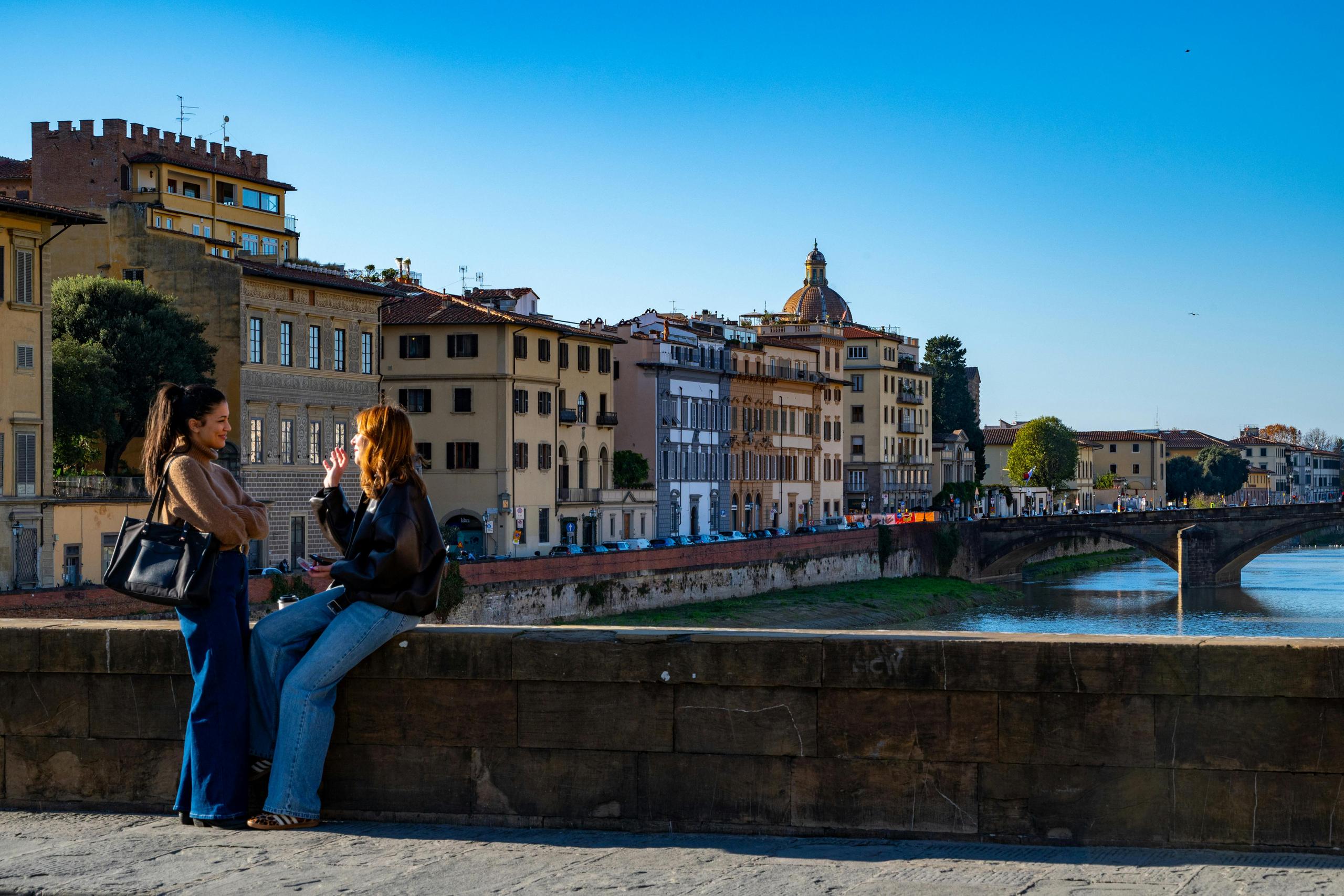
In the afternoon, shadows stretch along façades, and the light becomes warmer and softer. Oltrarno reveals its most intimate and authentic side: residents reclaim the spaces, children play, some sit on benches reading the newspaper, while nearby others converse after work.
When evening arrives, the atmosphere changes without losing its authenticity: the alleys fill with people, voices intertwine, and amid laughter, conversations stretch into the night accompanied by a glass of wine. Trattorias welcome habitual patrons with simple gestures and traditional dishes, in a spontaneous balance between conviviality and a sense of belonging.
In this context, staying means tuning in to Florence, sharing its rhythms, recognizing its habits, and letting oneself be guided by a pace that belongs not to the observer, but to the one who lives there.
Oltrarno 1881 Apartments are born from this vision. Located in a Renaissance palazzo, they offer an experience that does not separate the guest from the city but brings them closer to its most authentic dimension.
The nine apartments, each with its own identity, resonate with the soul of the district: materials, colors, and details reflect the creative vitality of Oltrarno. Contemporary spaces, with careful attention to interior design, integrate sensitively and respectfully into the original architecture.
Living here becomes a form of participation. Steps become habitual, routes repeat, the sounds, smells, and faces of the neighborhood enter daily life until they feel familiar.
Florence, then, ceases to be a sequence of places to pass through. It is revealed as a fabric of moments, composed of gestures, time, and presences.
Experiencing it from within means relinquishing haste and the idea of completeness, embracing a more essential and profound dimension.

