
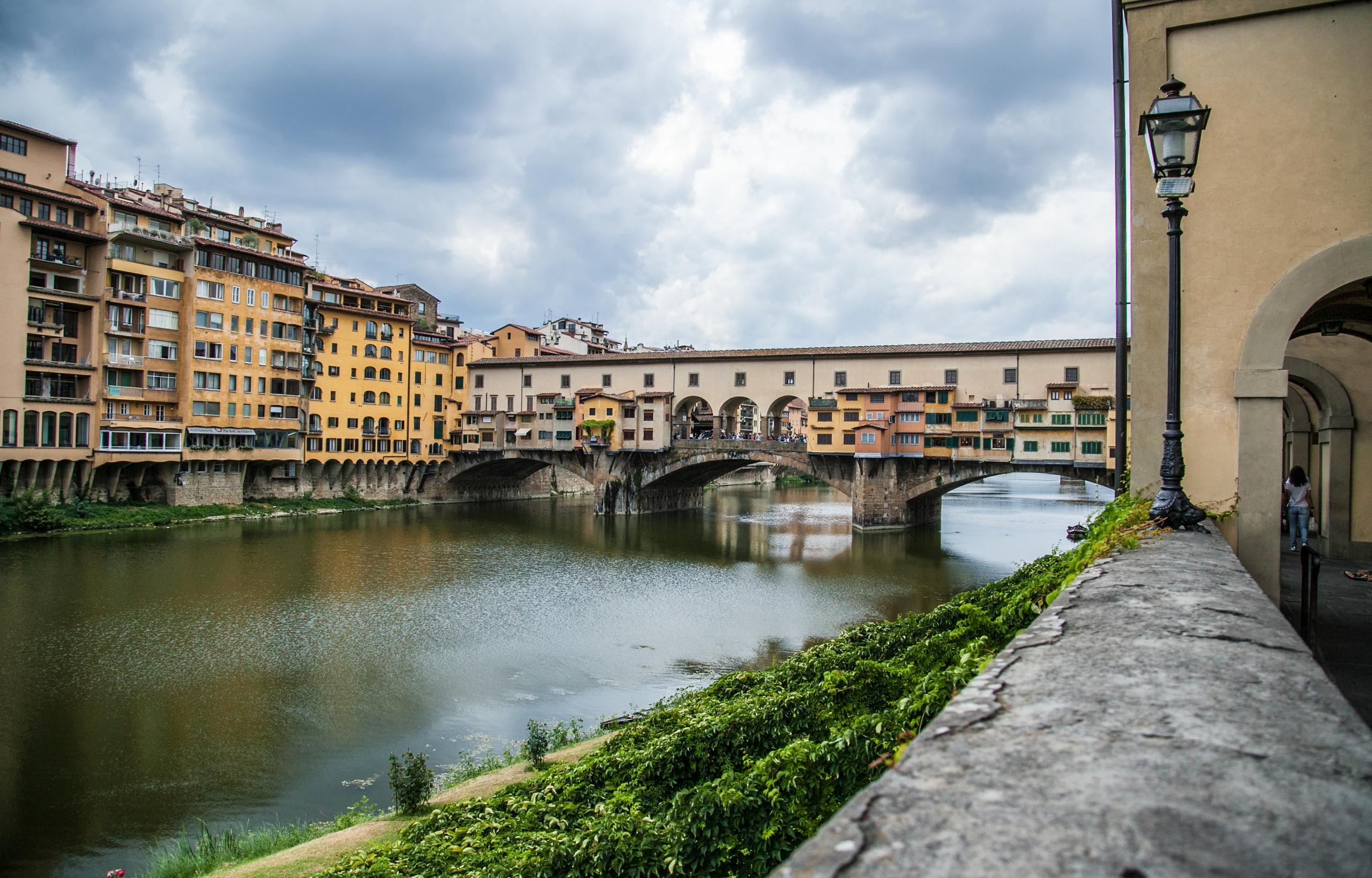
Florence in the rain: museums and historic palaces to discover
art
A rainy day in Florence can become an opportunity to spend more time with the city’s artistic and cultural heritage. Museums, historic palaces and exhibition spaces lend themselves particularly well to an itinerary designed for the autumn months.
Located at the gateway to Florence’s historic centre, Grand Hotel Baglioni is an ideal starting point for reaching some of the city’s principal cultural landmarks.
Set within a historic building, the hotel preserves original materials and details inspired by the local artistic tradition, combining the atmosphere of the past with contemporary comfort. On the top floor, the panoramic B-Roof restaurant overlooks some of Florence’s most recognisable monuments.
From Piazza dell’Unità, it is possible to begin an itinerary designed to minimise travel between stops and make exploring the city easier, even on a rainy day.
The Galleria dell’Accademia is home to the world’s most important collection of sculptures by Michelangelo, including the celebrated David, one of the most recognisable symbols of Florence’s artistic heritage.
The museum also includes several other collections of particular interest, among them an extensive group of Tuscan gold-ground paintings and the Museum of Musical Instruments, which preserves numerous objects from the historic collection of the Luigi Cherubini Conservatory.
Adjacent to the gallery is the Accademia delle Belle Arti, an institution historically connected with the city’s tradition of artistic education.
Florence cannot be understood solely through its medieval and Renaissance heritage.
Museo Novecento offers a perspective on modern and contemporary art, extending the cultural narrative of the city beyond the periods for which it is best known.
Including it in the itinerary introduces a 20th-century and contemporary dimension alongside Florence’s great historic collections, offering a broader view of artistic production in the city.
Palazzo Strozzi is one of the most representative examples of Florentine Renaissance architecture. Construction began in the late 15th century at the request of Filippo Strozzi, and the palace remained closely connected to the history of the family for centuries.
Today, it is one of Florence’s leading cultural centres, hosting a changing programme of temporary exhibitions throughout the year and creating a dialogue between the historic character of the building and art and culture from different periods.
At the heart of Piazza della Signoria stands Palazzo Vecchio, originally founded in 1299 as the Palazzo dei Priori and seat of government for the medieval Florentine Republic. Over the centuries, both its name and function changed in step with the city’s political history.
Also known as the Palazzo della Signoria, it became the residence of Cosimo I de’ Medici in the 16th century, when it was transformed into a ducal palace. After the Medici court moved to Palazzo Pitti, the building took the name Palazzo Vecchio and returned to an administrative role.
Today, it houses Florence City Hall and is also one of the city’s principal museums.
A visit includes some of the palace’s most significant interiors, among them the celebrated Salone dei Cinquecento and the Medici apartments, as well as works such as Michelangelo’s Genius of Victory. The Torre di Arnolfo also offers panoramic views across the city.
The Museo Nazionale del Bargello, part of the museum network that also includes the Medici Chapels, Orsanmichele, Palazzo Davanzati and Casa Martelli, is one of Florence’s most important museums dedicated to sculpture.
Its collections bring together major Renaissance works by artists including Michelangelo, Donatello, Ghiberti, Cellini, Giambologna and Ammannati.
These are complemented by an extensive collection of applied arts, spanning different forms and materials and offering a broader perspective on the artistic and artisanal traditions connected to the history of Florence.
The Uffizi is an essential destination for anyone wishing to explore the history of Italian art in greater depth.
It forms part of a wider museum complex that also includes the Vasari Corridor, Palazzo Pitti and the Boboli Gardens, together creating one of Florence’s most important cultural centres.
At the heart of the collection is the artistic heritage assembled by the Medici family, expanded over time through bequests, exchanges and donations. Among these additions is a particularly significant group of religious works originating from the suppression of monasteries and convents.
The galleries span several centuries of art history, from the Middle Ages to the modern era, with an especially important concentration of works from the Florentine Renaissance.
Alongside paintings, the museum also preserves major collections of ancient sculpture, drawings and prints, including one of the most substantial and important graphic collections in the world.
Given the scale and variety of its holdings, the Uffizi rewards time and is particularly well suited to a day devoted entirely to art.
Palazzo Pitti was founded in the 15th century and became the principal residence of the Medici family in the 16th. Over the following centuries, the palace accompanied the political transformations of the city, passing from the Medici to the House of Lorraine and later to the Savoy dynasty, before becoming one of Florence’s principal museum sites.
Today, the palace brings together several collections and exhibition routes. The Palatine Gallery includes works by artists such as Raphael, Titian, Rubens and Correggio, while the Gallery of Modern Art presents paintings and sculpture from the 18th to the early 20th century, with a particularly significant representation of 19th-century Italian painting.
The Royal Apartments, the Treasury of the Grand Dukes, and the collections dedicated to fashion and costume complete the experience.
Palazzo Pitti therefore offers a way of understanding not only the history of Florentine art, but also the families and dynasties that inhabited and transformed the city over the centuries.
The palace stands in the heart of the Oltrarno, one of Florence’s most distinctive neighbourhoods, known for its artisan workshops, ateliers and creative traditions that remain closely woven into everyday city life.
These are only some of Florence’s best-known cultural landmarks. The city holds many more museums, palaces and exhibition spaces to discover, including places beyond the most frequently visited routes.

