
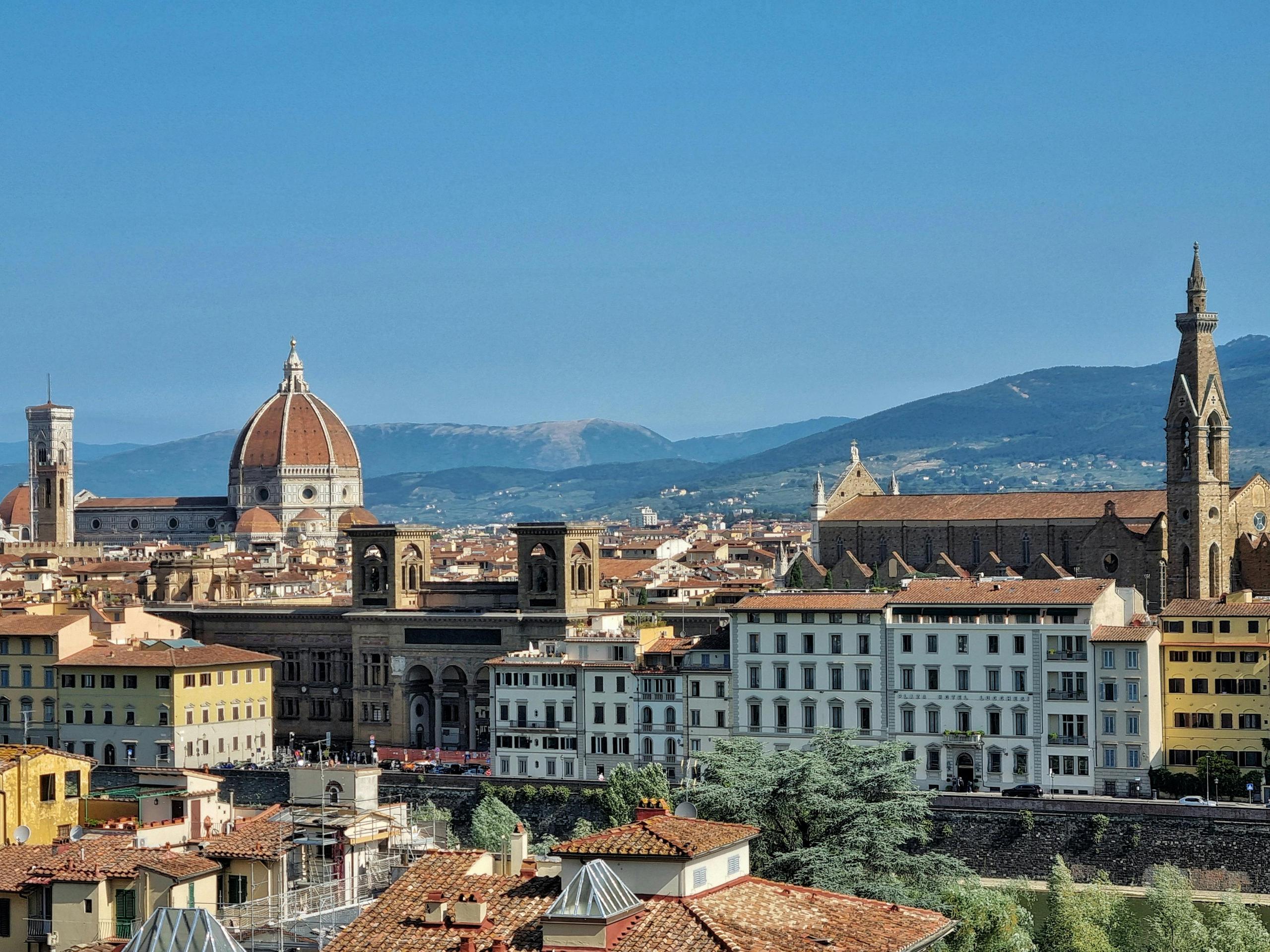
Florentine summer: when the city finds a different rhythm
From June to September, Florence extends its cultural life beyond museums, theatres and institutional spaces. Music, cinema, talks and performances move outdoors, inhabiting squares, gardens and urban places with a more open, informal energy.
The city changes pace. Its historic centre becomes less ceremonial, more convivial; familiar places reveal new uses, new sounds, new ways of being together. In this season, Florence is not only contemplated: it is experienced through evenings, encounters, walks and moments that belong as much to local life as to cultural discovery.
Within this atmosphere, staying in an apartment allows travellers to move closer to the city’s daily rhythms. In a Renaissance palazzo in Piazza de’ Nerli, in the heart of San Frediano, Oltrarno 1881 Apartments offers a privileged point of view from which to enter Florence naturally.
Its nine renewed apartments preserve an intimate, residential quality. Natural light shapes the rooms; each space has its own identity, expressed through essential and elegant furnishings, refined materials and details that echo the artisan soul of the neighbourhood. Here, between domestic privacy and urban life, staying in the Oltrarno means experiencing Florence not simply as a destination, but as a place to inhabit.
A Florentine summer is composed of many artistic languages.
Jazz, classical music and electronic sounds move through the city in different ways: concerts in historic settings and piazzas, festivals across gardens, and cultural programmes hosted in places returned to public life with new meaning.
Among the most recognisable rituals of the season is open-air cinema. With Apriti Cinema!, the big screen moves to Piazza de’ Pitti, in the heart of the Oltrarno, transforming one of Florence’s most iconic spaces into a place of vision and encounter.
Dedicated to Italian and international auteur cinema, the programme includes films in original language with subtitles, alongside moments of dialogue with directors, actors and critics. Its charm lies not only in the quality of the selection, but in the strength of the urban setting: cinema leaves the theatre and enters the life of the city, accompanying summer evenings with a slower, more shared rhythm.
Dance, performance, literary meetings, talks and multidisciplinary reviews add further layers to the Florentine summer. Walking through the centre, it is not unusual to come across unexpected moments of culture and spectacle, animating squares, gardens and the Lungarni with a sense of discovery.
During the summer months, several places expand Florence’s cultural geography beyond its most canonical addresses. The Parco delle Cascine and the Parco dell’Anconella are among the city’s most recognisable green spaces: large areas lived daily by Florentines, where social life and culture meet through aperitifs, concerts, DJ sets, theatre and conversations on contemporary themes.
A different atmosphere can be found at the Giardino delle Rose, at the foot of Piazzale Michelangelo. Here, the view over the city, the presence of Folon’s works and the dialogue between nature and urban landscape create a more intimate and contemplative setting. In summer, the garden hosts cultural events, performances, artistic installations and literary presentations, in continuity with its poetic identity.
Manifattura Tabacchi, on the other hand, speaks of contemporary Florence. Born from the regeneration of a former cigar factory, it is now one of the city’s most significant places of urban renewal: an environment where industrial architecture, creativity, fashion, art and design come together to shape a new cultural destination. During the summer, its programme alternates exhibitions, artist encounters, presentations, talks and projects dedicated to contemporary languages.
In the historic centre, the Caffè Letterario delle Murate preserves an identity deeply connected to the transformation of the city. Set within the former Murate prison complex, it is now a reference point for Florence’s cultural life. Book presentations, debates, aperitifs and musical evenings make it a place where culture remains accessible, convivial and alive.
Together, these spaces show how summer in Florence is not concentrated in a single centre. It unfolds across parks, gardens, restored architecture and places of encounter, offering a way to experience the city through nature, art and shared enjoyment.
The Lungarni divide the historic centre in two and open onto many of Florence’s most evocative views.
As the sun begins to set, the riverbanks change atmosphere. The sky takes on warmer tones, the silhouette of the city becomes sharper, and the golden light of evening reflects on the Arno.
In summer, these riverside spaces become animated by open-air venues, cultural events, kiosks, street food, live music, DJ sets and cinema surrounded by greenery. The mood is relaxed and convivial, accompanying the evening as the city moves gently from day into night.
Beyond major events such as Firenze Rocks, Florence hosts a wide constellation of festivals and reviews, touching many different musical and artistic languages.
Among the most representative experiences, Secret Florence brings art, cinema, dance and music to often unexpected locations, creating a multidisciplinary itinerary connected to contemporary research. The Florence Dance Performing Arts Festival explores the relationship between dance and architecture, finding in the Chiostro Grande of Santa Maria Novella a setting of particular intensity.
At the Parco delle Cascine, Open Air Circus introduces the language of contemporary circus through acrobatics, performances and installations. The Firenze Jazz Festival spreads music across historic villas, piazzas, gardens, concert halls and venues in the Oltrarno, confirming the city’s ability to connect historic places with contemporary sound.
This plurality is enriched by programmes that open Florence to wider musical geographies, such as Festival au Désert, dedicated to the dialogue between Africa, the Mediterranean and Europe, and projects that bring music to symbolic places in the city, including Sagrati in Musica, with concerts hosted in front of some of Florence’s principal churches.
Together, these events offer the image of a lively, plural summer city: one that honours its historic identity while placing it in conversation with contemporary artistic languages and new forms of cultural participation.
In summer, Florence reveals a more open and contemporary dimension. Music, cinema, festivals and performances compose an urban narrative that invites travellers to experience the city with attention, curiosity and presence.
Oltrarno 1881 Apartments becomes a natural starting point for entering this rhythm: between Florence summer events, cultural life and the authentic energy of one of the city’s most distinctive neighbourhoods.

