
Artisan Florence: a journey through the workshops of Oltrarno
destinations
There is a Florence that does not reveal itself at first glance—one that escapes the distracted gaze of the tourist and instead unfolds slowly, through the rhythm of life in its streets and squares.
This is the Florence of the Oltrarno district, where Florentine craftsmanship still lives.
This itinerary becomes a journey into the culture of making: wood, leather, paper, restoration—materials shaped by the hands of artisans into objects that carry both function and meaning.
Artisan traditions in Florence trace their origins back to the Middle Ages, when the city emerged as one of Europe’s leading economic and cultural centres.
It was in this context that the Arti, medieval guilds of merchants and craftsmen, were established. These institutions regulated professional activities and safeguarded expertise through structured systems of apprenticeship.
From this foundation emerged the vocations that still define the city today.
Goldsmiths, for example, developed refined techniques supported by a sophisticated patronage capable of recognising artistic value beyond material worth.
Similarly, leather artisans flourished in a territory rich in resources and positioned along key trade routes, transforming raw materials into objects designed to endure—combining functionality with elegance.
Alongside these trades existed a broader universe of makers: cabinetmakers, restorers, bookbinders, woodcarvers—a widespread system that still survives today in Florence’s artisan workshops, particularly in the living fabric of the Oltrarno.
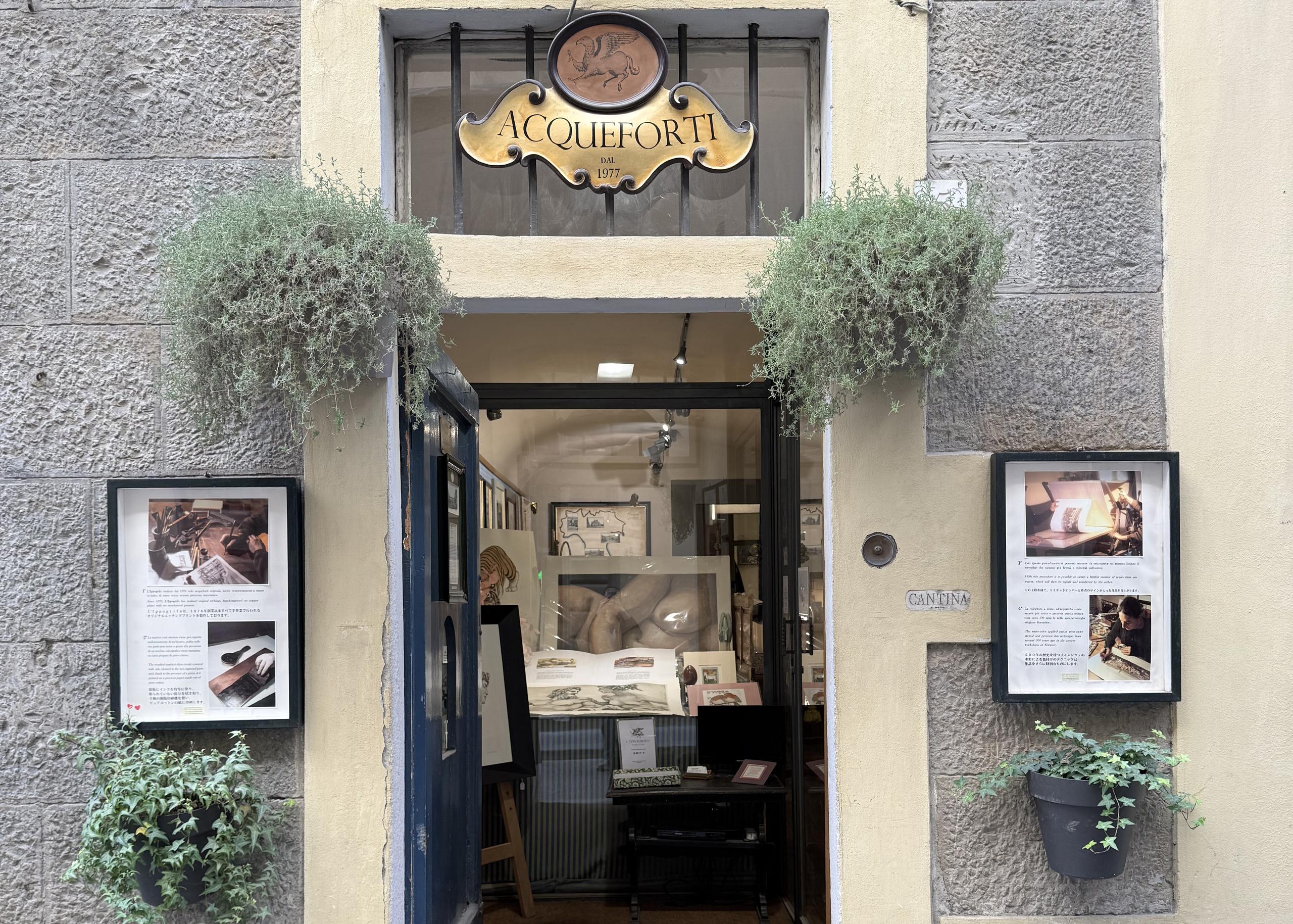
Among the most fascinating crafts, decorative paper-making holds a unique place. Its tradition developed during the Renaissance, when Florence became a centre for book production and the arts of writing.
Techniques such as marbling and block printing are still practiced today. Sheets are hand-decorated, pigments floating on water to create unrepeatable patterns, or pressed through engraved matrices that reproduce designs with subtle variations—never identical.
It is a language made of texture, colour, and gesture.
This deep-rooted presence of craftsmanship is no coincidence. For centuries, Florence has been a place where art, commerce, and culture coexisted, generating a constant demand for objects of both quality and aesthetic value.
Today, this artistic heritage continues to evolve.
Artisans still work with gestures and rhythms passed down through generations, yet they engage with the present—collaborating with contemporary design, experimenting with new languages, and opening their work to an international dimension.
Historic workshops are not frozen in time; they are spaces in transformation, where tradition remains alive while adapting to new sensibilities.
In this sense, the Oltrarno district represents the most authentic expression of artisanal Florence.
To follow the thread of its workshops is to abandon the idea of a linear route. Here, getting lost is part of the experience.
Wandering between Santo Spirito and San Frediano, one quickly understands that these workshops are not simply commercial spaces—they are places where knowledge is both preserved and renewed.
Discrete signs, half-open doors, muted sounds of work in progress. Light falls obliquely across workbenches, illuminating worn tools and raw materials awaiting transformation.
It is in the encounter with the artisan that the experience becomes real.
They share fragments of their craft: how an object is made, how long it takes, which techniques are involved. In this direct exchange, the true value of their creations becomes clear.
If fortunate, one may observe the gestures themselves—hands cutting leather, engraving metal, or layering colour onto paper.
More than a visit, it becomes a genuine encounter with a living craft, practiced every day with the same care and dedication.
Within this context, staying in the Oltrarno becomes part of the experience itself.
Oltrarno 1881 Apartments were conceived with precisely this intention: to offer direct and authentic access to a more genuine, less conventional Florence.
Set within a Renaissance palace in Piazza de’ Nerli, in the heart of San Frediano, the property features nine fully renovated apartments—each distinct in layout and character, yet unified by a coherent design vision.
The interiors establish a dialogue between architecture and the urban landscape, creating a continuous relationship between space and context.
Natural light defines each environment, while furnishings—essential, elegant, and carefully selected—echo the artisanal identity of the neighbourhood through materials, textures, and details.
The use of high-quality materials reflects a balance between classicism and contemporaneity, ensuring comfort and functionality without disrupting the aesthetic harmony of the spaces.
Staying here means aligning with the rhythms and habits of local life. In this balance between interior and exterior, between domestic intimacy and urban vitality, the Oltrarno experience shifts from observation to active presence.
Oltrarno 1881 Apartments interpret living as a form of quiet participation in the life of the neighbourhood—an invitation to experience Florence from a more authentic and personal perspective.

