
Wine as an expression of Chianti’s identity
enogastronomy
Chianti is Tuscany’s wine country par excellence: a hilly landscape between Florence and Siena, renowned throughout the world. Soils rich in galestro and alberese, together with the native Sangiovese grape, produce its celebrated DOCG wine, protected by the historic Consorzio Vino Chianti.
For centuries, vines have accompanied the history of these hills, helping to shape their landscape, agricultural traditions and culture.
The bond between this land and its wine production is so ancient that, in 1716, Grand Duke of Tuscany Cosimo III de’ Medici issued a decree officially defining the production area—one of the earliest designations of origin in the world.
The relationship between Tuscany and vine cultivation has deep historical roots. The Etruscans practised viticulture, and over the centuries the tradition became increasingly intertwined with the economic and social life of the region.
The term “Chianti” appears in documents held in the Datini Archive in Prato between 1383 and 1410, referring to a particular type of wine. Over time, the name of the territory and that of its wine became ever more closely connected, creating a shared identity that extends far beyond production alone.
A significant moment in this long history came in 1716, when Cosimo III de’ Medici issued a decree defining the boundaries of several Tuscan wine-producing areas, including Chianti, and introduced a principle of protection linked to geographical origin.
More than a century later, in 1872, Bettino Ricasoli helped open a new chapter in the history of Tuscan wine, setting out in a famous letter a formula that would become a reference point for modern Chianti.
The journey continued throughout the twentieth century, through the gradual definition and protection of production, leading towards the system of designations that would consolidate the wine’s identity.
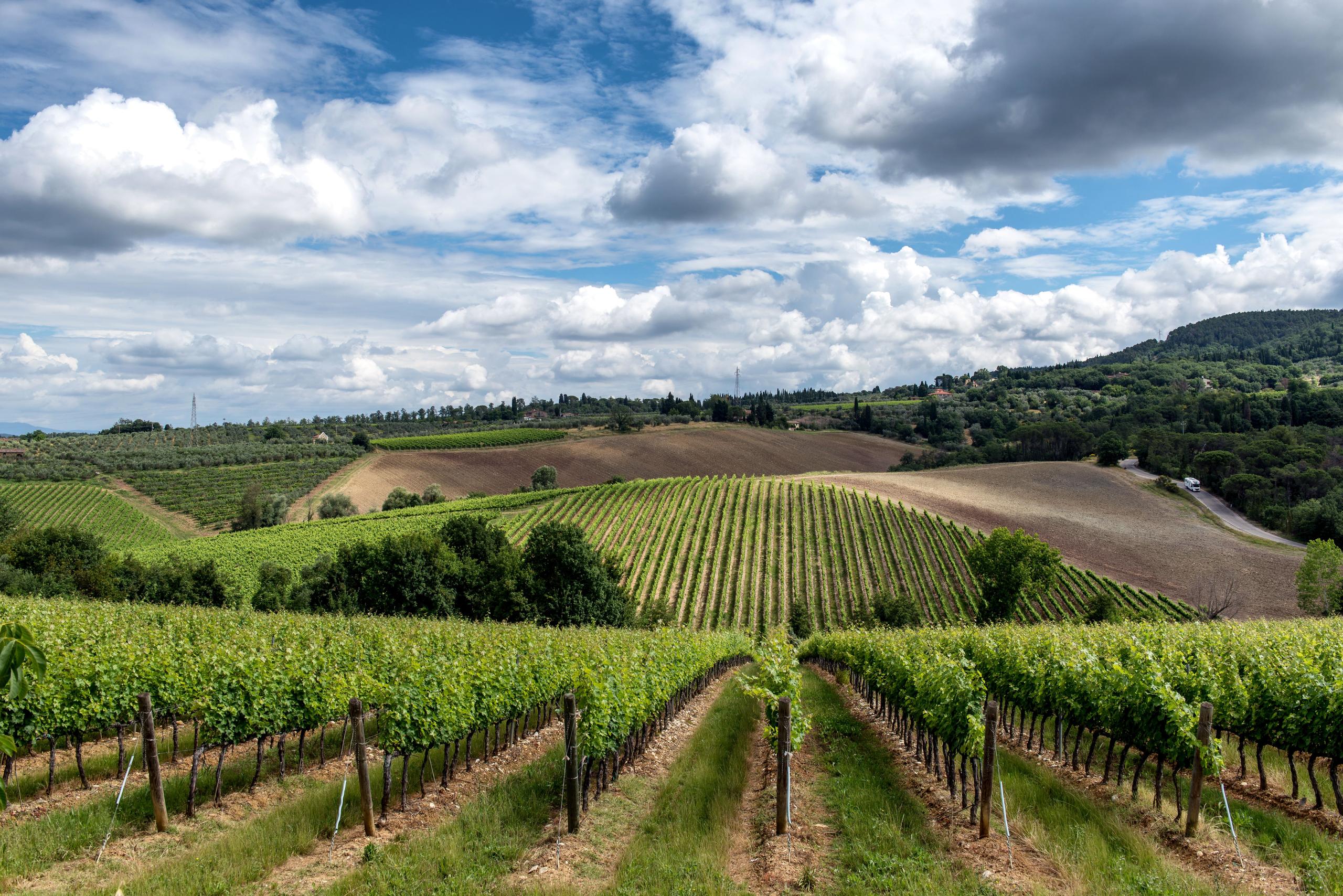
In Chianti, viticulture helps define the very shape of the landscape. The rows of vines follow the contours of the hills, emphasising their geometry and creating a balance in which human labour and nature appear deeply connected.
It is precisely this relationship that transforms wine into a cultural expression.
Behind every vineyard lies a knowledge of place built over time: an understanding of the soil, exposure, seasons and the time required for each stage of cultivation to find its natural balance. It is a heritage of practices born from observation and experience, linking agricultural work to the specific qualities of the land.
The glass thus becomes the final point of a story that began much earlier—in the soil and in the knowledge of those who cultivate it.
Every year, the connection between wine and territory finds one of its most significant expressions at the Expo Chianti Classico in Greve in Chianti.
The 2026 edition, scheduled to take place from 10 to 13 September, will bring together producers and local businesses, transforming the town into a meeting place for wineries, winegrowers and enthusiasts.
Tastings and opportunities for further discovery offer a chance to go beyond the simple act of sampling wine and explore the heritage of knowledge, traditions and relationships behind every bottle.
The history of the event dates back to the 1970s. Over time, it has changed both its name and format, gradually evolving into the Expo as it is known today. This evolution reflects the desire to continue presenting wine not only as a product of excellence, but as an integral part of Chianti’s cultural identity.
Borgo di Pietrafitta Winery will also be among the producers taking part in the event.
Its participation stems from the activity of the Borgo’s agricultural estate, where hospitality exists alongside vine cultivation and winemaking. This dimension gives tangible expression to the relationship with the land and the wine culture of these hills.
Bringing Pietrafitta wine to the heart of Greve in Chianti means sharing one of the Borgo’s most authentic expressions. It is a story that begins among the vineyards and continues in the glass, conveying the character of the territory and the agricultural culture that has accompanied it for centuries.

